


A Groundbreaking Tool Brought to you by Gopher State One Call
Overview
For the first time, and with no additional cost to the user, Minnesota excavators and designers can access ticket-specific data provided by participating facility operators to aid in the design and excavation process.
How It Works
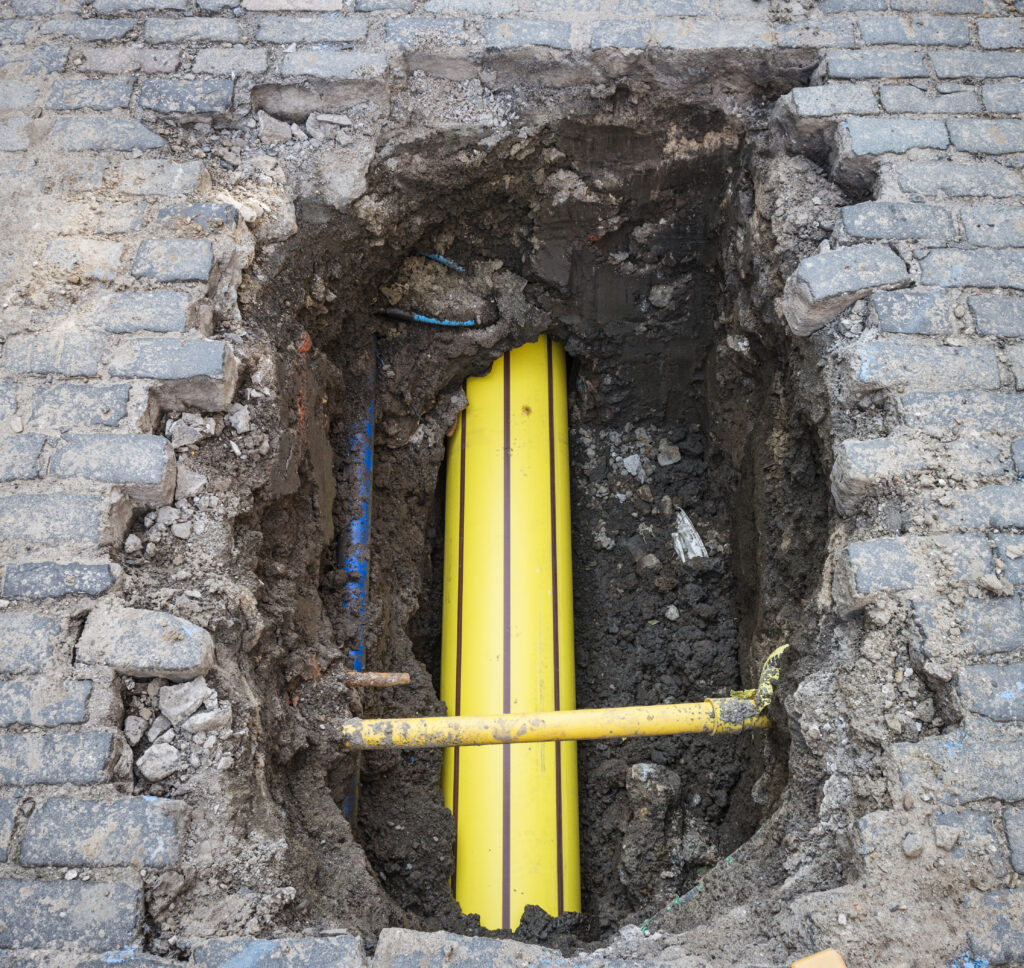
Site X-Ray works by automatically requesting geospatial infrastructure data from each participating facility operator that has utilities in the excavation area and displays the buried infrastructure for all participating utilities at a dig site.
To Get Started
For more information on how to participate in this program, please reach out to Gopher State One Call Chief Operations Officer Kelly Connolly.
Benefits for Designers and Contractors
By supplementing the One Call ticket, designers can now see what conflicts might arise at the beginning of the project, and contractors can have a better view into what is underground, helping to reduce damage and increase the efficiency of projects.
This software facilitates collaboration between stakeholders from facility operators to excavators to:
- Minimize errors, reduce rework, and help keep projects on track and on budget;
- Reduce delays in data access and streamline field operations; and
- Help to prevent costly damage to infrastructure.
Benefits for Facility Operators
- Site X-Ray easily connects to nearly any type of enterprise geospatial software, and there is no need for a facility operator to change its data structure.
- Facility operator data changes in real time, resulting in consistently up-to-date data.
- Facility operators also have full control of what data is shared and with whom they share it.
- The program retrieves data from a facility operator reflecting the contractor-defined dig area submitted with the associated One Call ticket, and the data is viewable only for the 14-day life of the ticket—in many cases a time far shorter than markings remain visible on the ground.
Site X-Ray is intended to supplement the One Call ticket process, but does not replace it. State requirements to identify the area of excavation and physically locate all underground facilities remain in effect.